

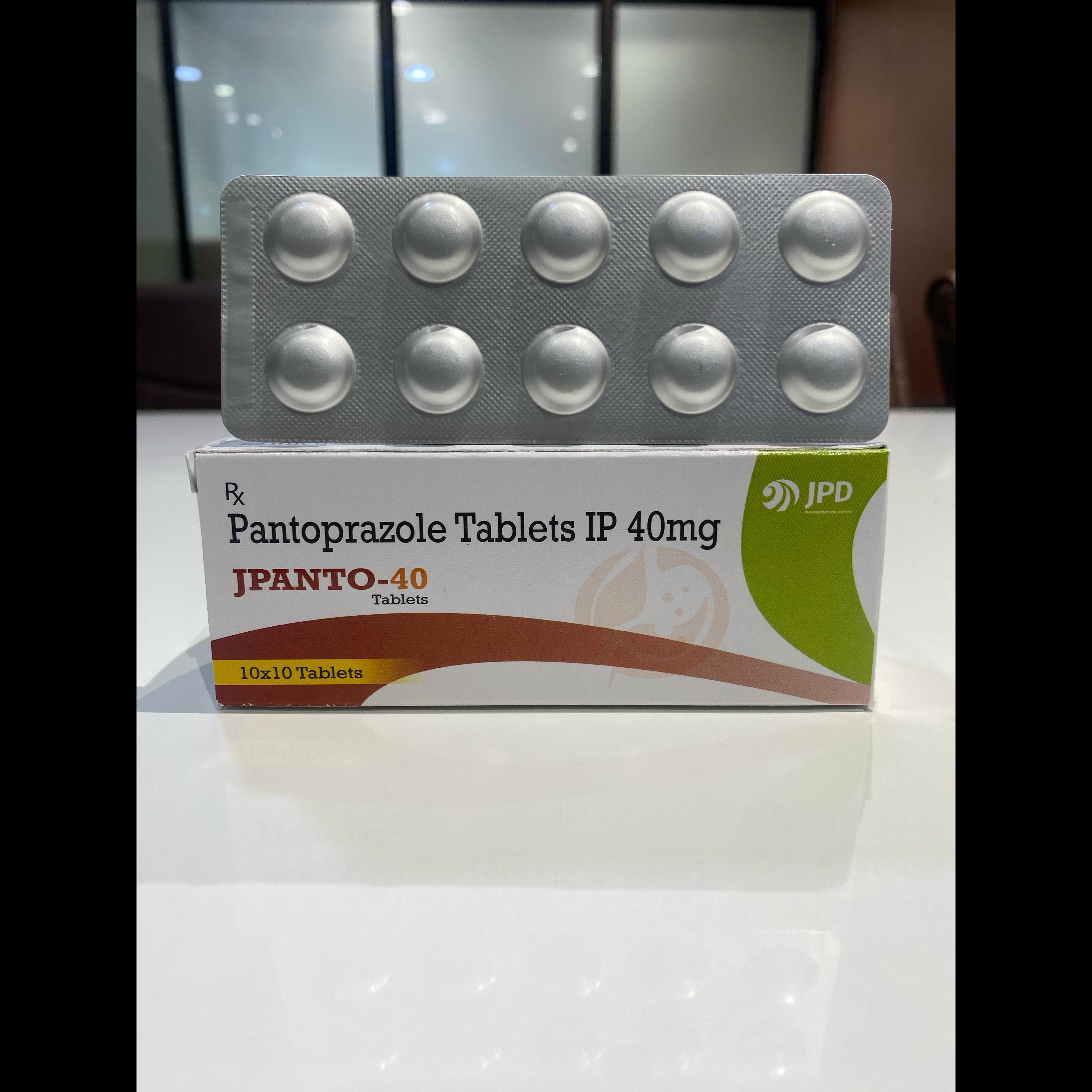
JPANTO 40
PANTROPRAZOLE 40MG
Pantoprazole 40mg is a medication primarily used to treat and manage conditions caused by excessive stomach acid production. It is a proton pump inhibitor (PPI) that works by blocking the acid-releasing pumps in the stomach lining, thus reducing the amount of acid produced.
Here are some of the main uses of Pantoprazole 40mg:
Erosive Esophagitis (EE) associated with GERD: This is a condition where stomach acid backs up into the esophagus (food pipe), causing inflammation and damage, leading to symptoms like heartburn. Pantoprazole 40mg is used for short-term treatment (typically up to 8 weeks) to heal this damage.
Maintenance of Healing of EE: After the initial healing of EE, Pantoprazole 40mg may be prescribed as a maintenance therapy to prevent further damage and recurrence of symptoms.
Zollinger-Ellison Syndrome: This is a rare condition involving tumors that cause the stomach to produce too much acid. Pantoprazole 40mg is used for long-term treatment to control acid secretion and manage symptoms.
Other Pathological Hypersecretory Conditions: Pantoprazole can also be used to treat other conditions where the stomach produces an excessive amount of acid.
Helicobacter pylori Eradication: In some cases, Pantoprazole may be used in combination with antibiotics to treat infections caused by H. pylori bacteria, which can lead to ulcers.
Prevention of NSAID-Induced Ulcers: For individuals at high risk of developing ulcers due to prolonged use of nonsteroidal anti-inflammatory drugs (NSAIDs), Pantoprazole may be prescribed to prevent the formation of such ulcers.
Important considerations:
Prescription Only: Pantoprazole 40mg is a prescription medication and should only be taken as directed by a healthcare professional.
Not for Immediate Heartburn Relief: It is important to note that Pantoprazole is not intended for the immediate relief of heartburn symptoms.
Potential Side Effects: While generally well-tolerated, Pantoprazole can have side effects. Common side effects include headache, diarrhea, and nausea. More serious side effects can include allergic reactions, vitamin B12 deficiency (with long-term use), low magnesium levels, and an increased risk of bone fractures (especially with high doses or prolonged use).
Interactions: Pantoprazole can interact with other medications, so it's crucial to inform your doctor or pharmacist about all medications you are taking, including over-the-counter drugs, herbal supplements, and vitamins.
Always consult with a doctor or healthcare provider for proper diagnosis, dosage, and management of any health condition.